The saffron note, decoded
What does saffron smell like in perfume?
Saffron does not bring one fixed smell to every perfume. It can feel dry and hay-like, warm and leathery, faintly bitter, floral or almost mineral—then change again according to the rose, woods, amber effects, musks or citrus placed around it.
By NASMÉ Parfums · Published 30 August 2026 · 7 minute read · Educational guideIn perfume, saffron is commonly perceived as dry, warm, hay-like, leathery or slightly metallic rather than simply sweet. The finished effect depends on whether the perfumer pairs that impression with rose, oud, amber effects, musk, citrus or other materials—and a listed saffron note does not by itself prove that natural saffron extract is present.
Begin with real saffron, not a colour or price
Saffron is the dried stigma of Crocus sativus. Scientific reviews identify safranal as a major aroma compound formed from the precursor picrocrocin, while also showing that saffron aroma is a combination of multiple volatile compounds rather than one isolated molecule. Drying, storage, origin and measurement method can alter the observed aromatic profile.
That complexity helps explain why careful descriptions use several facets. Natural saffron has been described in sensory research with hay-like, herbaceous, floral, grassy, slightly metallic and iodoform-like aspects. A perfume may emphasise only part of that spectrum; the word on a note list cannot tell you the balance by itself.
A saffron note is not proof of natural saffron
A perfume note describes what the composition is intended to suggest. The effect may use a natural saffron-derived material, individual aroma materials, a constructed accord or a combination. IFRA describes modern fragrance creation as a palette of natural materials and precision-built synthetic molecules, both judged inside a complete formula.
This distinction protects accuracy. ‘Saffron note’ is an olfactory description; ‘contains natural saffron extract’ is an ingredient claim that should be supported by the formula and supplier documentation. Rarity, natural origin and price are also separate from how beautifully a material is used.
The surrounding accord decides the mood
Saffron is a bridge material because its dry warmth can connect brightness, petals and dark woods. Rose can make it feel plush or luminous. Oud, leather and incense can pull out its drier shadow. Amber effects and musk can soften the edges, while bergamot or another citrus can make the opening feel clearer and more airborne.
These are compositional directions, not guaranteed formulas. Two perfumes can list saffron and rose yet smell unrelated because dose, material quality, supporting notes and the transition into the dry-down are different.
- Saffron + rose: floral volume with dry spice or a mineral edge.
- Saffron + oud or leather: darker wood, smoke and suede-like texture.
- Saffron + amber effects or musk: rounded warmth and a softer trail.
- Saffron + citrus: contrast between a bright opening and a warmer heart.
How to decide whether saffron suits you
Do not judge from the first spray alone. Smell on a blotter to understand the structure, then wear one candidate on skin at the labelled dose. Notice whether the opening feels bright, medicinal, leathery or sweet to you; return after the top notes settle and again during the later dry-down.
Compare the same amount in the environment where you intend to wear it. A dense saffron-oud structure may feel dramatic outdoors and much more assertive in a cooled office or restaurant. A citrus, tea or musk treatment may feel more transparent. Personal perception and the complete formula matter more than the note’s reputation.
- Opening: dry, bright, metallic, sweet or sharp?
- Heart: does rose, leather, wood or amber become dominant?
- Dry-down: does the warmth remain balanced or become tiring?
- Setting: is the projection comfortable at the intended dose?
Saffron does not guarantee performance
A saffron note cannot promise a fixed number of wearing hours or a particular projection radius. Longevity and diffusion depend on the full formula, concentration, dose, spray pattern, surface, environment and wearer. Dark supporting materials may create an impression of weight, but that is not the same as measured duration.
Use repeatable wear tests and separate projection from longevity and sillage. Before sale, the finished formula also requires ingredient-level safety review, stability and compatibility work and compliance with the intended market. IFRA conformity for a fragrance mixture does not replace the finished product’s safety assessment or local legal obligations.
How NASMÉ interprets saffron
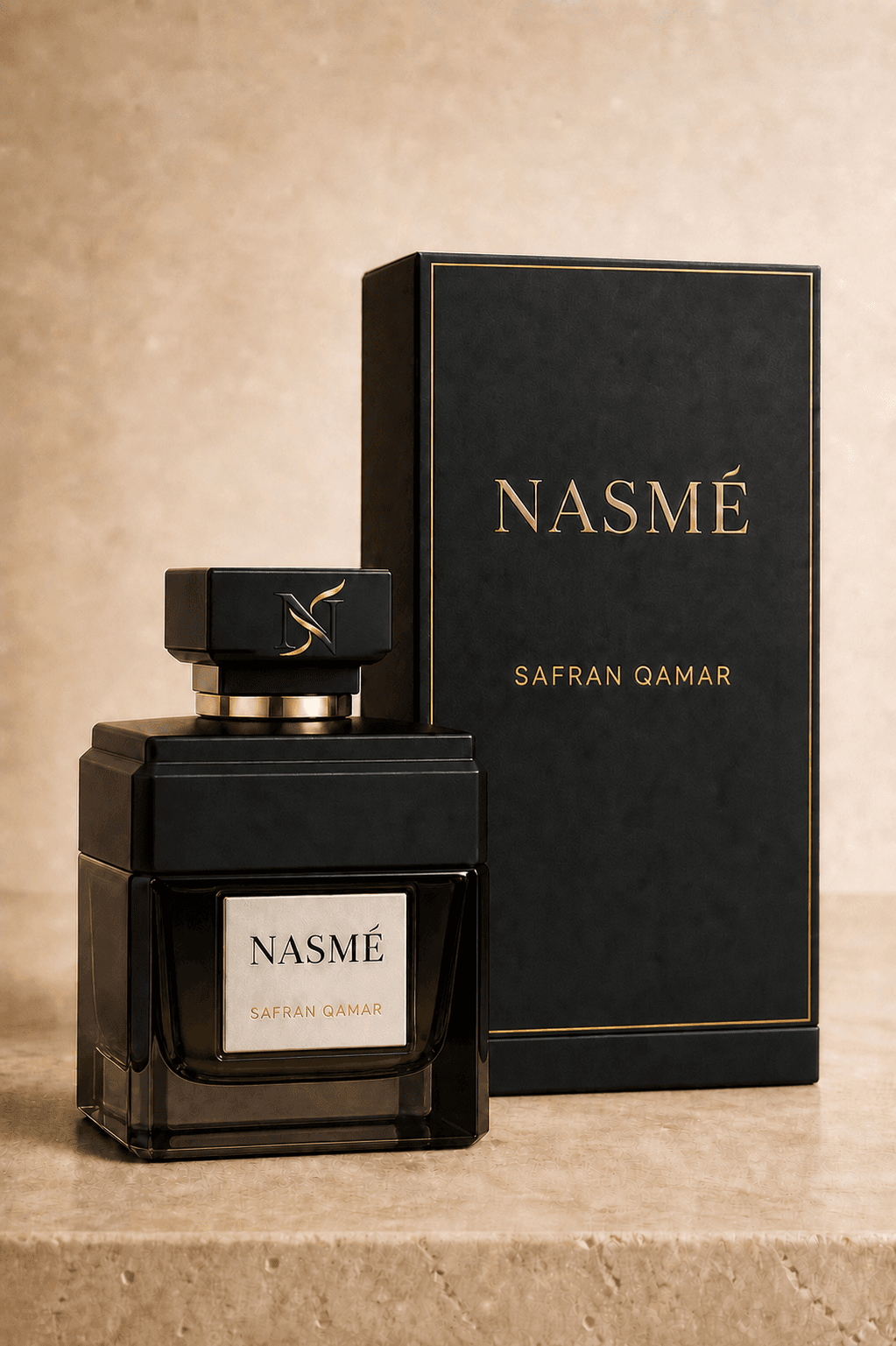
Safran Qamar is NASMÉ’s pre-launch study of moonlit saffron: bergamot and pink pepper create brightness, rose shapes the heart, and amber, oud and sandalwood form the intended trail. The concept is designed to explore radiance before depth rather than treating saffron as automatically heavy.
The note pyramid and description express a creative direction, not a released formula or a confirmed natural-saffron claim. Final materials, concentration, performance, packaging, price and availability remain subject to perfumer review, supplier evidence, testing, regulatory assessment and production readiness.